 |
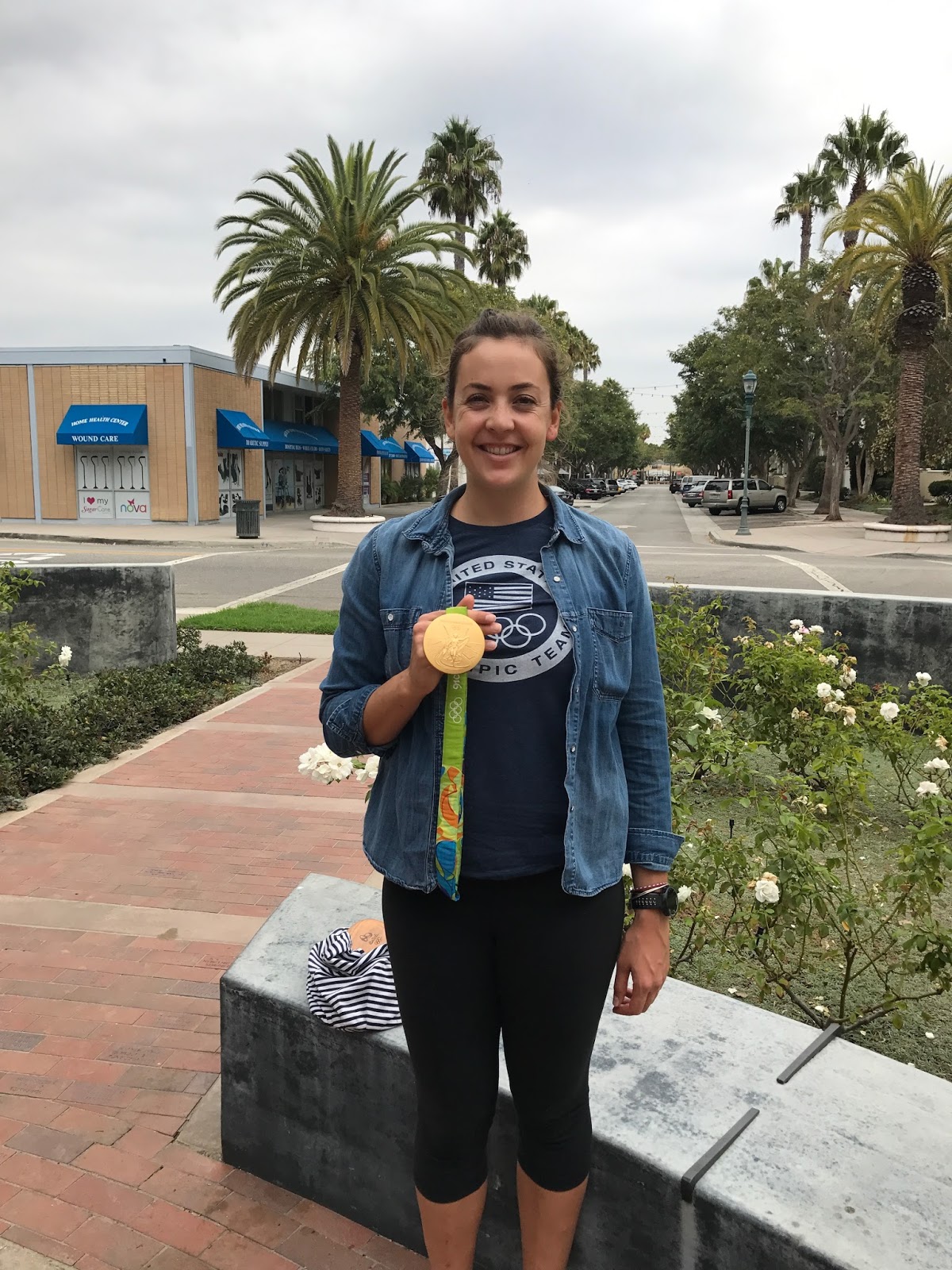
| Olympic Gold Medalist Kerry Simmonds |
Kerry Simmonds went to Rio as one of many first-timers on the U.S. Olympic team hoping to leave Brazil with a medal. The San Diego native along with seven other members of the U.S Women’s Rowing Eight dominated the competition to bring home the gold. The 27-year-old shared her journey of taking up the sport and becoming part of the illustrious history of rowing glory.
Rudy Martinez: So tell me about Rio and how it was when you first got there?
Kerry Simmonds: When we first got there it was exciting. All the volunteers were really excited to have us, and we were probably not the first country to get there but one of the first teams to get there. Everyone was pretty excited and of all of the Team USA athletes we met, we got to travel with US Men’s Gymnastics. It was just fun to meet the other athletes and everyone was anticipating competing soon and there’s that excitement there.
RM: Was the boat and your equipment already there when you arrived in Rio?
KS: It was waiting for us when we got in but we still had to set it up. With the women’s eight, the boat comes in two halves. So we screw it together, and there’s a process that our Coxswain Katelin Snyder knows really well, so we kind of listen and do what she says.
RM: So she’s really the leader of you guys
KS: She’s the leader for that part, and she is definitely like a manager in a way. We are definitely sufficient in how to rig up to an extent because we’ve done it so many times.
RM: How were the conditions at Lagoa Rodrigo de Freitas?
KS: We came in basically expecting or prepared to deal with really bad conditions with the water. We took a lot of precautions as far as sanitizing our hands and the oar handles, but none of us got sick. We were taking precautions, we saw fish in the water and I think the water quality was definitely overblown. The quality was what it was but it wasn’t as bad as we thought it would be.
RM: Did you have any concerns about the Zika virus going to Rio?
KS: Sure. You hear about everything, but at the end of the day, there are people with US Rowing that the concern is their job to make sure we’re doing everything we can to be able to perform at the best level we can. I just let them do their job and listen to what they want us to do, follow the protocol, and I’m just there to compete and perform.
RM: On your first day in competition in the first heat, your team was incredible.
KS: I’m glad they have the heats because it helps get out that nervous energy. You do have confidence going in, but you don’t know what the competition has done because they have prepared too. It’s a test run so you can’t take much away from it as far as “Oh were gonna beat them because we beat them in the heats.” The finals is still a whole other thing but it was fun to let one rip.
Photo by: Damien Meyer/AFP
RM: You sure did let it rip because at the 1,000-meter mark your team was already a full boat length ahead of the Netherlands
KS: It’s the way the progression works because it’s the top one that goes through. I’m sure after a point in the race the other boats decided they would save some energy. Winning was the goal to prevent having to compete in the repechage.
RM: What was training like getting ready for the final?
KS: It was a bit long because we had five days and there was a lot happening with the races being canceled because of the weather. So we were prepared, and when Saturday rolled around, things were on schedule. The days in between we hoped to get practice in when we could and try not to get too worked up.
RM: When the final began, your team was running in third with Canada leading and the Dutch in second. By the time your boat crossed the 1500 meter, you went up six seats in the lead and Great Britain was starting to come back.
KS: I had a pretty good view of the field at this point and I do recall seeing Great Britain started moving into us a bit. I just remember thinking “Okay when are we gonna sprint. Let’s start the sprint,” and just waiting to hear Katelin’s call. She’s the one that’s gonna make the call for us to do whatever it is so we do it together. “When are we gonna go?” It was like two strokes but it seemed like a long time and we started to sprint and it was effective.
The whole race we were never freaking out about where we were in the race who was up or who was down. We knew if we needed to if the time came or if we were still down and it was getting closer to the finish that we had more gears. We all had that trust which was pretty cool.
Photo by: Christian Petersen/Getty Images
RM: What’s the communication like? Do you have ear buds or is Katelin just screaming in your ears?
KS: It’s a little more sophisticated than that. Katelin wears a headset and its connected to speakers throughout the boat. You can’t always hear it but I had a speaker in front of my feet. It’s enough to coordinate practices and if the crowd was too loud towards the end and we can’t hear her but we knew that was a thing and that could happen and feel what’s happening.
RM: What went through your mind when you knew you won?
KS: I was relieved that we executed the plan and it was bumpy at times and there was a little bit of chop here and there so it wasn’t perfect but we finished first.
RM: Your team finished two seconds ahead and the boat was going 20 kilometers an hour so it was pretty impressive.
KS: I think all of us were thinking “It would be cool if we had the conditions so we could go for a record” but at the end of the day getting the job done, getting across the line first was what counts.
RM: I know that feeling out each other to put together a perfect stroke is important. Emily Regan was in the first seat behind you and Amanda Polk in front of you. Did you interact with them more than the rest of your teammates?
KS: Amanda and I get along great and we were roommates in Rio. Emily and I rowed in double sculls leading up to the Olympics. So our coach used that history to set us up that way.
RM: How was it being up there on the podium for the medal ceremony?
KS: I was very emotional which I’m not always so I think I was bit overwhelmed by it. I definitely was tearing up a bit and I’m not someone who cries a lot so I think that was definitely a special moment and I had my family in the crowd and got to see them and actually look at them. When the anthem was going it was very cool because the flag was rising over Christ the Redeemer and it was beautiful and it was a beautiful moment.
Photo by Buda Mendes/Getty Images
RM: What was the closing ceremony like for you?
KS: It was like one big Carnival. It did rain a bit and I think our Ralph Lauren warm weather outfits wasn’t the best for the rain but closing was cool.
RM: It looked like nobody cared that the rain was coming down inside the Maracana. It just poured and nobody cared plus they started to give out the rain slicks so that was nice of them to do. When you came back to the US what was that like?
KS: It was a media whirlwind which I signed up because it’s a great opportunity to get more exposure to rowing, especially women’s rowing. It’s a cool opportunity to either get the word out and get women’s rowing out there more.
Photo by: Rob Kim/Getty Images
RM: So you went on to the Today show, you went to the New York Stock Exchange and then went to the White House to meet President Obama. After all the big ceremonies of Team USA being honored all over. What did you do next?
KS: I drove cross country for six weeks visiting friends. I had family in Denver and then took a side trip to Seattle (via plane), went back to Denver to pick up the car and then to Utah. I’m glad I did it because I don’t think there’s gonna be another time to have this much flexibility in my schedule. So I haven’t been home to San Diego yet.
RM: So I heard you used to play high school basketball and were also in cross country and then you went to the University of Washington to do rowing and you were a walk-on.
KS: It’s not as uncommon. People are usually surprised by it because most sports like gymnastics you start when you’re like four. Rowing is better when you start later in life because you want to be pretty developed. It’s not super healthy to start rowing because it’s a bit asymmetrical. Half the women’s team were walk-ons. All of the ladies who went to UW with me (except Kaitlyn) were walk-ons with similar backgrounds.
I never thought it was that big of a deal but Washington is extremely good at getting the word out about rowing and being like “you’re tall, you’re athletic looking.” There were a fair number of people that had not rowed that had tried out alongside me. I wasn’t like this loner that didn’t know anything but it was okay.
RM: So in your time with the team, you obviously learned about the school’s illustrious past and the 1936 Olympic rowing team?
KS: What I love about the University of Washington is Rowing has such a tradition behind it. Part of the culture of Seattle is Rowing because there are so many clubs there. Washington Rowing is so historic. That was a big draw for me just to be part of that. We had the shell from that U.S. team hanging over the dining hall.
I didn’t know the story about Joe Rantz until I read the book “Boys in the Boat” a couple of years ago. I enjoyed it because it’s very pro UW of Rowing and it gives a good history on how men’s rowing came to be. There are also some good books out there about women’s rowing that I’ve enjoyed too.
RM: That book was the first rowing book I ever read and I’ve been into rowing since I saw “The Skulls” and “The Social Network”. Have you ever met the Winklevoss twins?
KS: I didn’t, but they were at the same rowing gathering I was at once. A lot of people say that was the first rowing clip they have seen.
RM: How was it under UW coach Bob Ernst?
KS: I have a lot of respect for Bob because he gave me a lot of opportunities. After two years with the team, I was put on scholarship which was a big deal to me and my family. He really helped and encouraged me to try out for the U.S. team. He was the first one to tell me I could be an Olympian and there was certainly merit for someone to say that about you.
RM: When you made the US National team and knowing that Bob wasn’t going to be your coach, what was it like working under Tom Terhaar?
KS: The biggest adjustment was that he wasn’t hands-on with us and it was up to you to determine your own fate. It wasn’t that big of an adjustment, but a lot more time practicing and you kind of just have to be patient. That’s tough for some people but I’ve always had a professional relationship with Tom. Because he was hands off, you didn’t get to know him well. It helped him and us stay more objective.
RM: All of you seemed very effective to stay that way because you won two world championships and set a world record at the World Cup in 2013! What’s it like to have your name as part of one?
KS: I think at the time it happened early on so I wasn’t aware of its significance on how hard it was to set world records. Conditions are not always great. A lot of it depends on do you have water that will allow you to go fast. It was a dream day. We won and we set a world record and we were all pretty young in the boat so you appreciate it down the line and that it’s very hard to do that. Maybe it’ll stand for a while (laughing).
RM: So here’s the big question. 2020? Are you gonna try and compete again to be on the USA women’s team?
KS: I think right now I’m taking time off and hoping that decision I can make in the next couple months, but right now I’m very much undecided.

